
The Edge Most Traders Ignore

I’ve been away from the keyboard — the typing one, anyway — for a while now.
To be blunt: I’ve been consumed by trading. It’s not that trading has been amazing (it seems it’s been a rough market for many), but sometimes trading wraps its claws around you, wrestling with that dangerous line of addiction — and sometimes crossing it. The screen can be a seductive and jealous mistress. When the markets are moving and the dopamine is flowing, it drags you away from anything else, let alone staring at a blinking cursor trying to find the right adjective.
And it’s even worse this time of year.
Winter has a way of conspiring with the markets. It’s cold outside, the days are short, darkness arrives before you realize the afternoon is gone. Staying glued to the screens somehow feels justified — almost sensible. The warm glow of the monitors starts to feel like a crackling fireplace. Before long, the rules you promised yourself you’d follow have quietly disappeared, and you’re settled in for hours while the markets flicker and dance.
And when the trading is finally over, my brain — fried after hours of staring at order books, scalping back and forth in a high-stakes game of cat and mouse — wants to do nothing but relive the mistakes and misfortune of the prior sessions.
Writing doesn’t come naturally to me. I’m a trader at heart. I think in risk-to-reward ratios and tape reading. In my world, creativity can get you punished. With execution, you want to think like a robot, not a poet. Stick to the playbook. Follow the rules. Feelings, impulses, improvisation — those things can wipe you out.
Trading is fast, loud, relentless. The feedback is instant and brutal. You’re right or you’re wrong, and the market tells you immediately. There’s a score. There’s always a score. Writing — and art in general — is the opposite of all that. It’s slow. Quiet. The feedback is delayed, uncertain, sometimes nonexistent. You can spend hours on something and have no idea whether it’s any good. No signal. No confirmation. For someone wired for the markets, that silence is deeply uncomfortable.
That doesn’t mean creativity has no place in trading. It just belongs in the right place.
When it comes to execution, creativity is dangerous. But in strategy development — in searching for an edge, refining systems, testing ideas — creativity is not only useful, it’s essential. Finding edge requires imagination. You have to see something others don’t, ask questions others haven’t thought to ask, build frameworks that don’t exist yet. It’s the one part of trading where going off-script is exactly what you’re supposed to do. That’s probably why I love it. It’s the only part of the process where the creative part of my brain — the part I’ve spent years suppressing at the desk — finally gets to do something useful.
So dragging myself away from all of it to write something that has nothing to do with markets, no edge to find and no framework to build, is a different kind of challenge. It doesn’t help that when I look around for inspiration from others writing in my “genre,” the typical output is an inflated P&L screenshot and a sonnet about what a killer trader they are.
But here’s something I know to be true, even when I forget to live by it: traders need outlets.
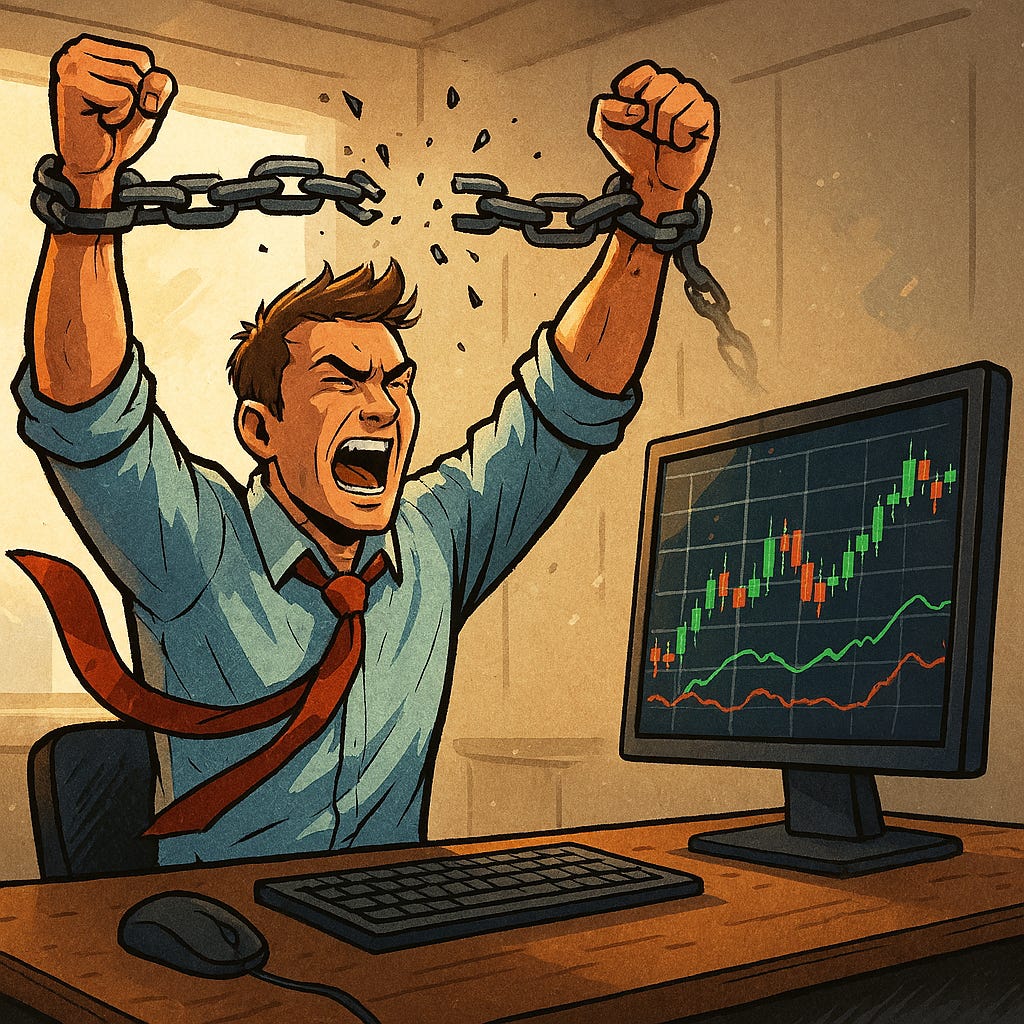
The screens will burn you out if you let them. Exercise, nature, hobbies, time with friends and family— these things don’t just save your sanity, they improve your trading.
The happier, healthier, and more disciplined you are, the better you perform. I’m certain of it — and I’ve got the numbers to back it up.
You could argue I’ve got it backwards — that profits make you happy, not the other way around. But I don’t think so. Happiness might be the edge most traders never think to develop. In a profession where everyone is searching for an advantage, one of the most powerful edges may simply be building a life that keeps you balanced and grounded.
There’s a brutal flip side, too. Bad moods, poor discipline, and unhealthy routines tend to lead to bad trading — which only makes things worse.
So take care of yourself. Balance your life accordingly. It’s easy to get wrapped up in something as dangerous and addictive as trading. When things are going well, you don’t want to leave the screens. When things are going badly, the last thing you feel like doing is practicing healthy habits.
I’m going to try to do a better job of that myself. And I’m starting here — back at the keyboard, getting back to the book, trying to remember that the work of building a good life and the work of becoming a better trader aren’t as separate as they seem.
Happiness might be the most overlooked edge in trading. Everyone’s out there chasing systems, data, information. Maybe the real work is simpler — and harder — than any of that.
One caveat — and it’s an important one. You can write, meditate, exercise, journal, and be the happiest person in the world… but if your strategy doesn’t have edge, the market will still politely take your money.
Not only do I want to get back to writing, but also back to coaching more, so If anyone out there is interested in a free coaching session, feel free to reach out. Send a short background — message me here, on X, or email creamtrades@gmail.com. I’ll open up a few free sessions and see how it goes.
Also open to topic suggestions — what do you want to read about?